

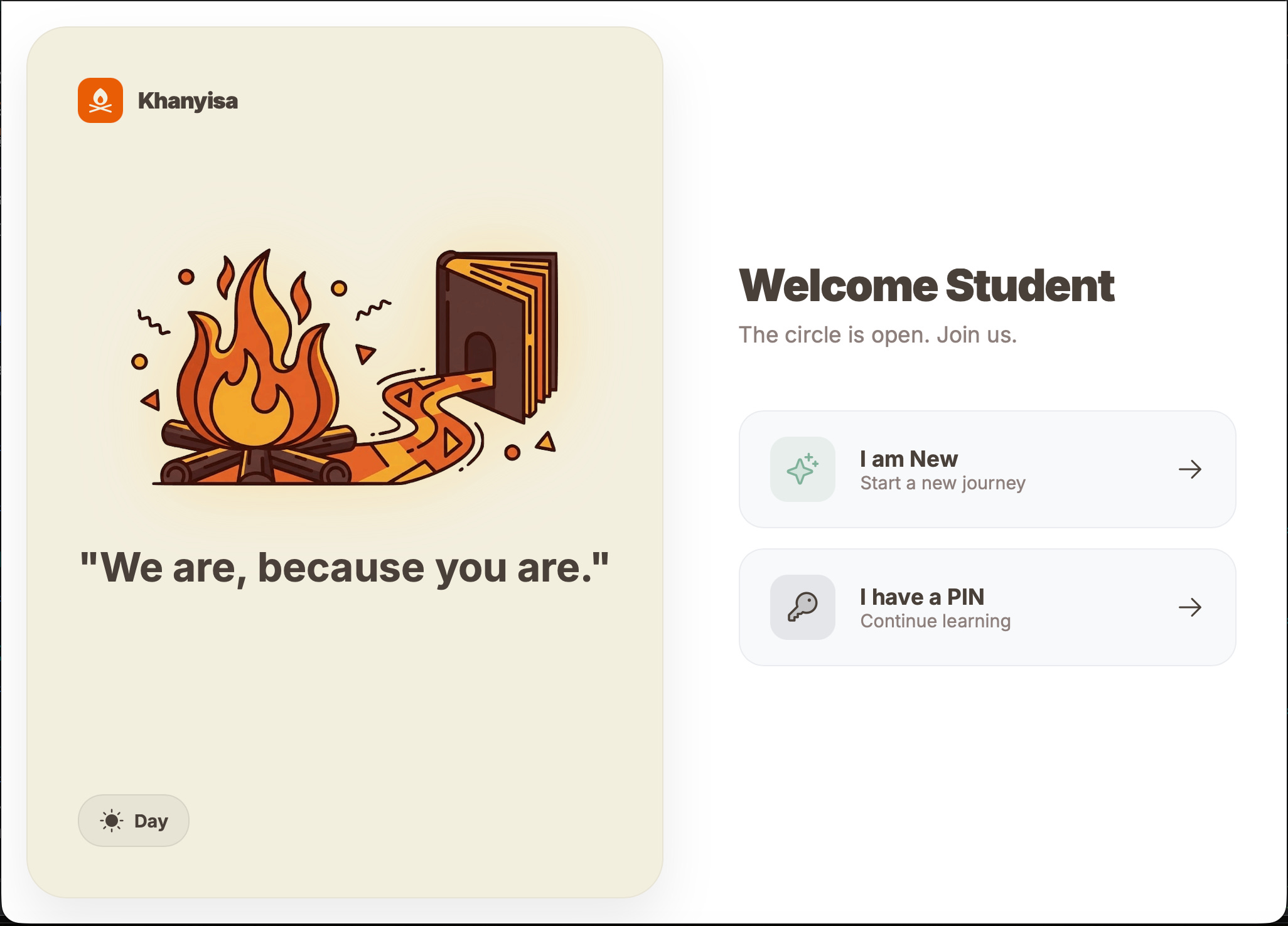
The Invisible Wall
In Silicon Valley, you assume every user knows what a “Search Bar” is. You assume they know how to type, click, and navigate. But when you are building for the Digital Divide (Project Khanyisa), those assumptions are bugs.
After we ignited the Rust engine (see Field Report 002), we faced a new problem: The Empty Input Box.
For a student with zero digital literacy, a blinking cursor isn’t an invitation; it’s a wall. It provokes anxiety. What do I type? Will I break it?
We realized we couldn’t just drop them into the AI. We needed a decompression chamber. We needed a Dojo.
Phase 1: Identity Before Function
Most educational apps are sterile. They ask for an email and a password immediately. We flipped the script. We are building on the philosophy of Ubuntu (”I am because we are”). The first interaction shouldn’t be a transaction; it should be a welcome.
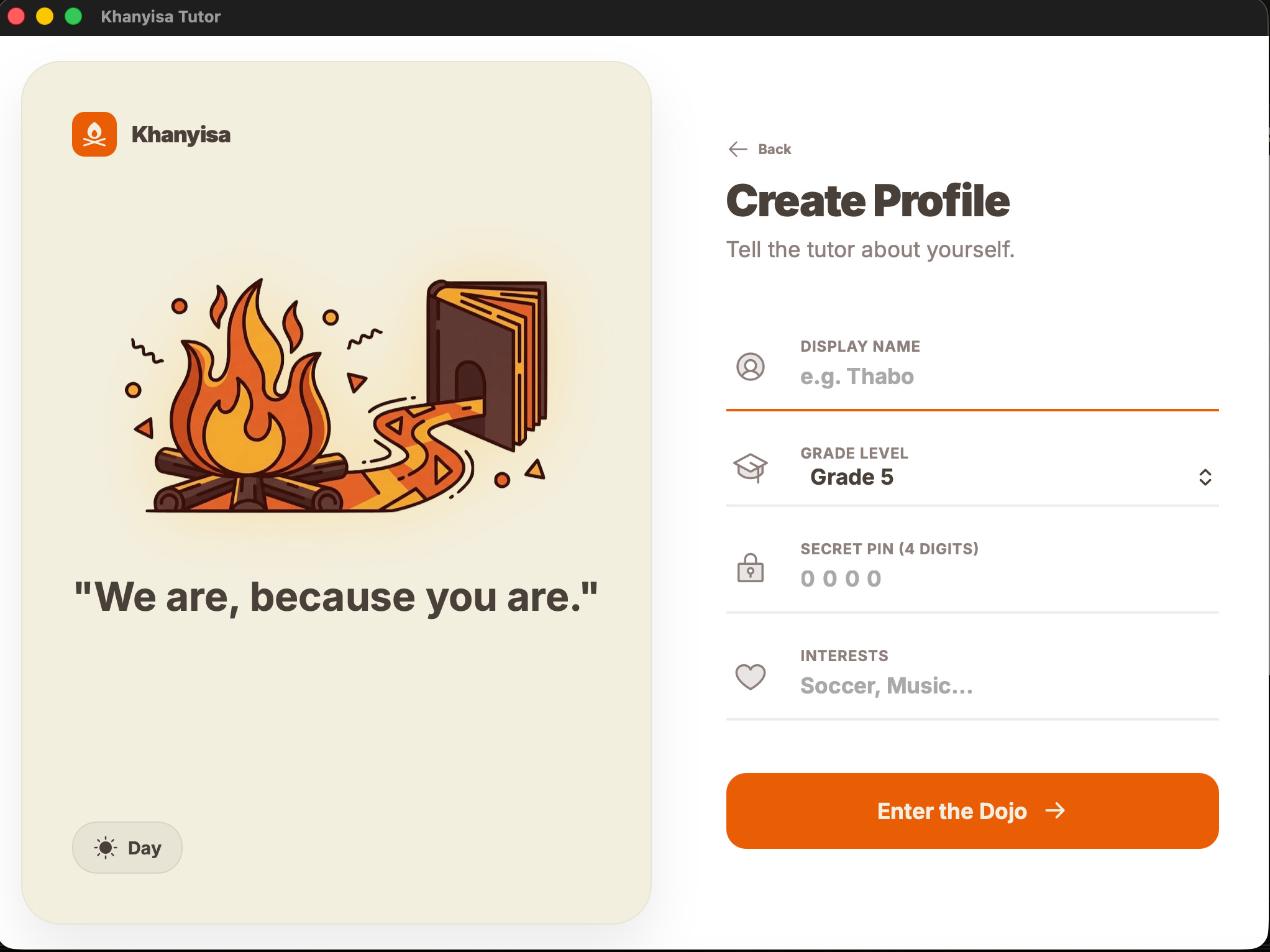
We implemented a Split-Screen Architecture:
Left (The Wisdom): An illustration of the “Shared Fire” (Ubuntu). This grounds the technology in culture.
Right (The Action): A simplified form asking for a “Display Name” and “Interests,” not an email.
This is “Epistemic Hygiene” applied to UI. We are signaling: This is a safe space.
Phase 2: The Dojo (Gamifying Literacy)
Before a student can ask the AI about biology, they must prove they can speak to the machine. We built The Dojo—a “Level 0” onboarding module.
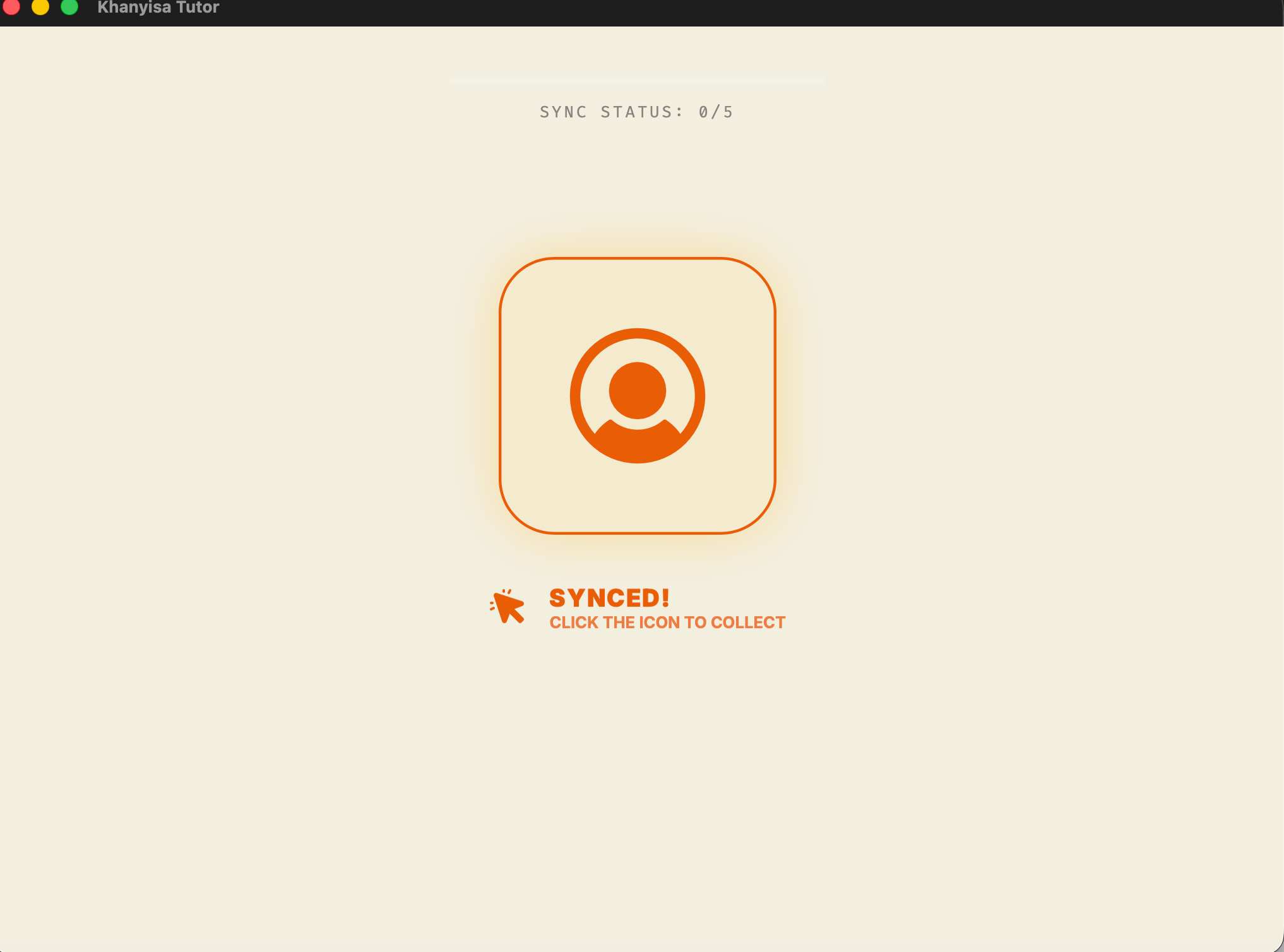
It is a simple game inspired by the “Syntax Sync” concept. The system presents an icon (e.g., a Brain or a User), and the student must type the word or click the matching element to “Sync” with the system.
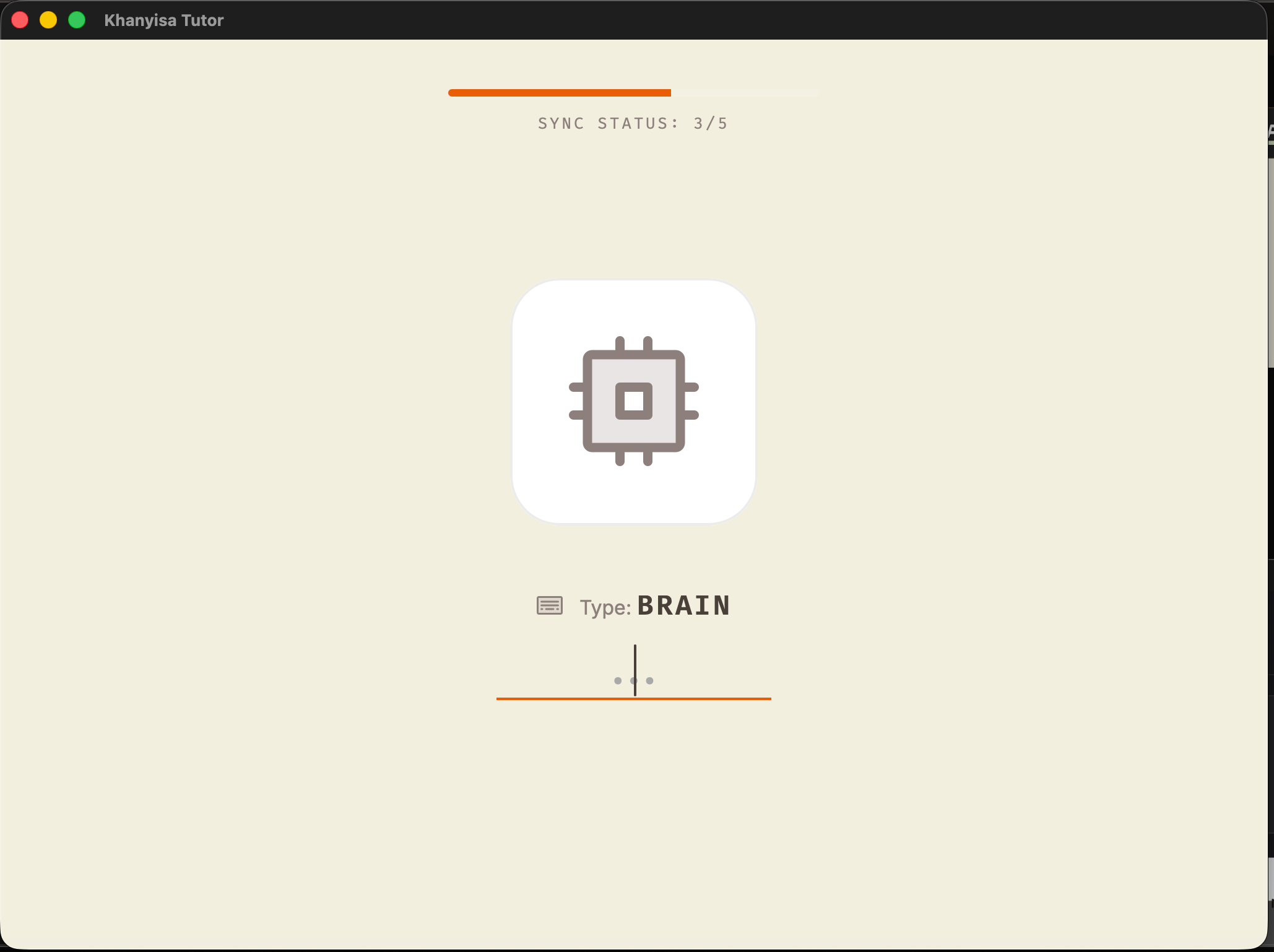
This serves two engineering purposes:
Hardware Check: It verifies the input devices (Mouse/Keyboard) are working on the Raspberry Pi.
Wetware Check: It trains the student’s brain to associate “Typing” with “Reward.”
The Tech Stack: Svelte 5 Runes
Under the hood, this UI is powered by Svelte 5 and Tauri. We migrated away from legacy state management to the new Runes system ($state, $effect). This makes the UI reactive at a granular level—crucial for running smooth animations on the limited GPU of a Raspberry Pi 400.
What’s Next: The Classroom
Once the student passes the Dojo, they unlock the core interface. Next week, in Field Report 004, we will unveil the “Bento Dashboard”—the central hub where the AI Tutor lives.
The blueprint is public. The code is sovereign.